
Tree Cabling & Structural Support
Sometimes a tree can be supported instead of removed.
Mature trees commonly develop structural features that increase the likelihood of limb or stem failure. Codominant trunks, included bark, long heavy limbs and old defects don't automatically mean a tree needs to come down.
In appropriate situations, pruning and supplemental support systems can reduce the likelihood of failure while allowing the tree to remain.
Tree cabling may be useful for:
• Codominant stems
• Weak branch unions
• Long or heavily weighted limbs
• Mature trees with valuable canopy over homes or other targets
• Trees with previous limb failures
• Structural defects that cannot reasonably be corrected through pruning alone
Static and dynamic support systems
Different trees require different approaches.
Static steel cable systems provide relatively rigid support and are commonly used where significant structural reinforcement is needed.
Dynamic systems allow more natural movement while limiting extreme movement between supported stems.
The appropriate system depends on the tree's structure, size, condition and the defect being addressed.
Cabling isn't a substitute for assessment
Installing a cable doesn't make a tree permanently safe, and it isn't appropriate for every structural problem.
Before recommending support, we look at the entire tree and determine whether pruning, cabling, monitoring, removal or some combination of those options makes the most sense.
Support systems should also be periodically inspected as the tree grows and changes.
Woodwitch Arboriculture installs tree support systems throughout Asheville and Western North Carolina.
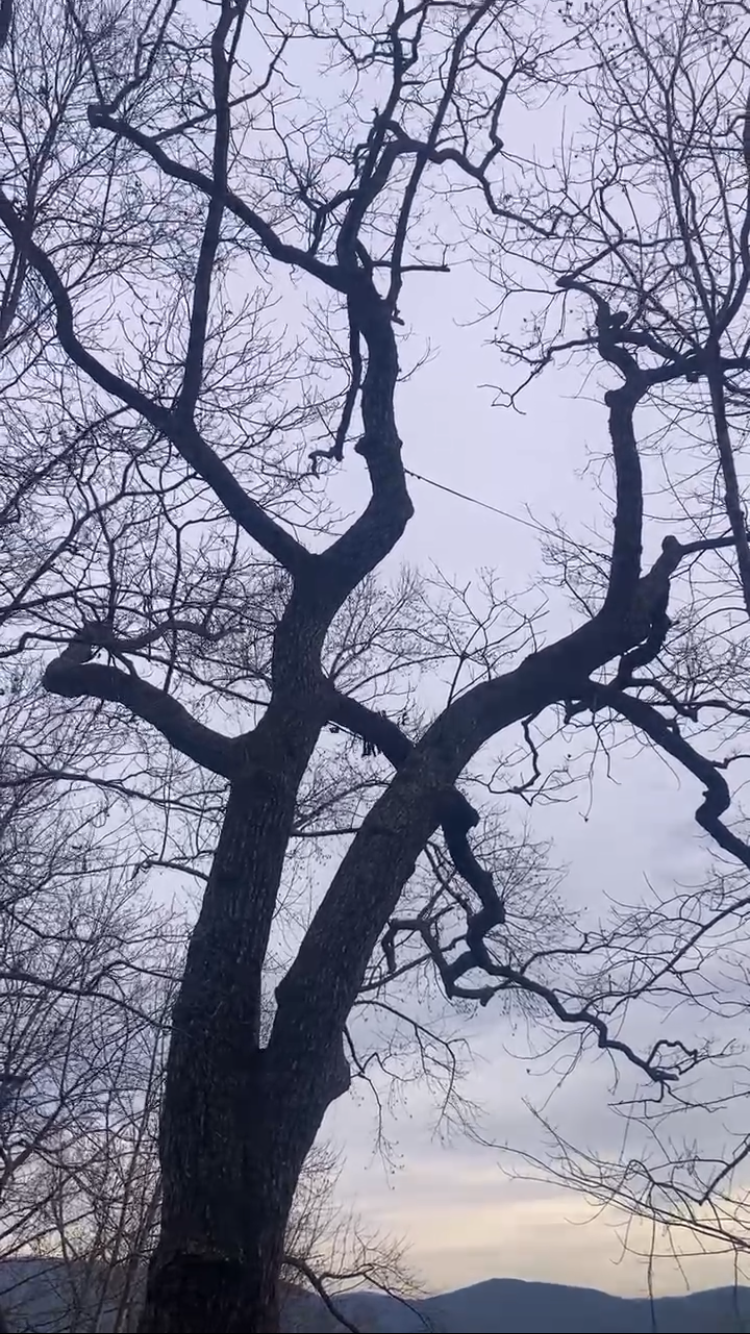
Steel Cabling supporting this massive co-dominant Chestnut Oak
Threaded rod supporting a weak union on this Red Bud.
Dynamic cabling and threaded rods supporting this multi-stemmed Southern Magnolia